Trust does not arrive in a relationship as a one-time grant. It accumulates daily, in the moments you choose repair instead of retreat, contact instead of contempt. Couples therapy often centers on repairing what went off course, but the work that sticks happens between sessions in the habits you carry home. I have watched partners rebuild something sturdy by stacking small, repeatable rituals, even after a long run of missed cues and tense weekends. The repair is not a grand gesture. It is the morning touch on a shoulder, the note left by the coffee machine, the forty seconds of honest acknowledgment after a sharp comment.
What a repair ritual actually is
A repair ritual is a predefined, repeatable action you both agree to use when tension spikes or connection frays. The point is not to avoid conflict. Conflict is a sign that two people with full lives are trying to share something complicated. The ritual creates a path back to safety so you can return to the conversation without fear that the last misstep has doomed the next hour.
Repair rituals work because they stretch the nervous system’s capacity to stay engaged. Stress narrows options, especially for partners with a trauma history or those navigating neurodivergent therapy goals around sensory load and processing speed. When your brain perceives threat, you fight, flee, freeze, or fawn. A ritual gives your body a different plan. It turns toward small acts that signal safety and reliability.
Couples sometimes assume a repair means solving the issue. Not so. A repair ritual often just marks the shift from threat to care. The problem can stay on the table. You are simply agreeing to hold it differently.
The anatomy of rupture and repair
Every rupture has a somatic layer. Breath shortens, jaw sets, shoulders inch upward, stomach clenches. The cognitive story follows quickly: He never listens. She always criticizes. The sooner the body gets a cue of safety, the sooner the mind can re-enter the conversation with nuance.
Trauma therapy pays close attention to this loop. Old injuries, even if they do not look dramatic from the outside, prime you to read neutral cues as danger. An eye roll today might light up a memory of being dismissed at twelve. EMDR therapy helps process and refile those memories so they lose their grip on present-day reactions. During couples therapy, we borrow EMDR’s respect for rapid body cues without trying to run full trauma processing in a charged moment. You are not reprocessing your childhood during an argument about dishes. You are noticing that your heartbeat shot up and your hands went cold, and you are choosing a ritual you have rehearsed when that happens.
Neurodivergent partners often show a different traffic pattern around rupture. Sensory thresholds might flood earlier, transitions can pinch, https://www.fuzzysockstherapy.com/contact and direct language helps more than hints. A ritual that looks simple on paper, like “take a break and return in ten minutes,” falls apart if the break does not include clear time cues, a sensory reset, and an explicit agreement that both will return. The good news is that structure can be soothing when used collaboratively. You can design rituals that match the way your nervous systems actually operate, not how you wish they did.
The role of predictability
Rituals work because they are predictable. Your partner knows what happens next, even if the topic is thorny. Predictability is not rigidity. It is an agreement that narrows uncertainty at exactly the point where uncertainty feels worst. Think of it as a bridge built in calm moments that you cross when the weather turns.
Relationship research often references a positive to negative interaction ratio, where a higher count of warm, attentive touches relative to critical or avoidant moves predicts stability. You do not need to calculate a ratio at home. You can track whether your rituals steadily, and concretely, add small positives during tense cycles. Five short repairs across a day, none longer than a minute, often shift the climate more than a single two-hour talk that burns both of you out.
Core daily rituals that stick
- Morning orientation: a 90-second check-in where each person shares one practical detail about the day and one emotional state word, followed by a brief touch or eye contact. No problem-solving. Just orienting. Parting cue: before leaving, name one thing you appreciate from the past 24 hours. If mornings are chaos with kids, move this to a text within the first hour apart. Reunion buffer: the first ten minutes after reconnection are for regulation, not logistics. Hang up bags, breathe, offer a hug or hand squeeze, and confirm whether either needs quiet before talking. Micro-apology: use a single sentence to acknowledge impact without explanation. Example: “That comment landed sharp. I see your shoulders tense. I’m sorry.” Follow with a question about what would help in the next five minutes. Nightly settle: ask, “Anything I missed today?” Listen for one minute each, no cross-talk, then choose a time the next day if a topic needs depth.
These are simple enough to remember, but do not confuse simple with easy. The repair starts with a decision to go small and frequent, then repeats for at least three weeks while your bodies learn the new pattern. When partners say rituals feel mechanical at first, I nod. Of course they do. New movement patterns feel clunky, then natural. The goal is not poetry. It is reliability.
A 90-second repair drill for hot moments
- Pause posture: both feet on the floor, shoulders relaxed if possible, eyes soft or looking down. If eye contact intensifies threat, look away and indicate that with a hand gesture you both know. Name impact, not intent: one sentence each. “When the volume went up, I felt cornered.” “When you walked away, I felt alone.” No rebuttals. Regulate together: two breaths in synchrony. In for four, out for six. If breath work is activating for either of you, swap to a tactile cue like a hand on a forearm for five seconds. Ask the repair question: “What would help you feel 10 percent safer right now?” Keep the bar low. Ten percent is reachable. Set the next step: agree to resume, reschedule, or reframe. If rescheduling, name a time window within 24 hours and write it down.
This drill looks structured because heated moments are where structure saves you. You can still be yourselves inside the steps. If you are both quick with humor, a gentle joke after step three might be restorative. If either has sensory overwhelm, skip touch and choose parallel regulation, like standing back to back for the breaths instead of face to face.
Language that lands during repair
Couples get tangled by intent and impact. Intent matters to you. Impact matters to your partner. A good repair ritual privileges impact first. You can talk about intent later. The first move is a one-sentence impact acknowledgment. The second move is curiosity: What would help now? The third is follow-through, even if it is tiny.
Avoid global language. Always and never invite counterexamples and escalate debate. Trade them for timestamps and specifics. “Yesterday, when you asked the question while I was on the Zoom call, I felt embarrassed,” has a path forward. “You always interrupt me,” does not. Keep your statements short. If you cannot say it in one sentence, you are probably mixing topics. Split them and address one.
Some couples benefit from a shared phrase that signals a reset. It needs to be neutral, not moralizing. An engineer and a teacher once used “new page” as their phrase. Another pair chose “small turn.” If you both cringe at phrases like these, pick something plain. “Pause and try again” works fine.
Trauma, EMDR, and repair at home
If one or both of you carry trauma, the nervous system can behave like an overzealous smoke detector. EMDR therapy and other trauma therapy modalities help turn that detector down to a calibrated setting. In couples work, I encourage partners to share two or three specific body signs that mean the detector is blaring. Racing heart, numb hands, tunnel vision, a buzzing behind the eyes, sudden urge to leave the room. Share what helps too. Weighted blanket for five minutes, cold water on wrists, pacing in the hallway, standing on the porch.
A well-made repair ritual honors these physiological truths. It makes space for regulation without punishing the person who needs it. A common misstep is demanding that the partner who needs a break also carry the burden of resumption. If your nervous system floods, you might agree to send a one-line text during the break that says, “I’m here. Back at 7:15.” If you are the partner waiting, you can meet the text with, “Received. I’m here too.” You are both holding the bridge.
If EMDR therapy is part of your individual work, bring your couples therapist the ritual you are practicing. We can help you weave EMDR resources like calm place imagery or bilateral tapping into a shared drill, with guardrails so you are not triggering deep material you cannot process together at home.
Neurodivergent-friendly adjustments
For autistic partners or those with ADHD, clarity and sensory care matter. Keep language literal. Replace “You know what I mean” with the actual meaning. Replace “We’ll talk later” with a time on a calendar. Use visual cues. A sticky note on the fridge that says “Reunion buffer: ten minutes” will beat a vague memory every time.
Auditory processing differences change how repair lands. Fast talkers can feel like hail. Slow down in ten-second bursts. Allow processing time after a sentence. Silent beats are not disengagement. They are bandwidth management. If you use a timer for breaks, pick one with a gentle chime so no one startles. Consider parallel play as reconnection. Folding laundry side by side can be more regulating than a candlelit debrief.
Co-parents and the kid factor
If you have children, your repairs do double duty. They reclaim adult connection and model self-regulation. Child therapy often teaches naming feelings and practicing do-overs. Bring that home. A simple, “I spoke sharply. That was not fair to you. I’m trying again,” said within earshot of a child, gives them a map for their own future conflicts. Do not drag them into your content. They do not need to know why the bill was late. They need to see that people can handle tension without humiliation.
Kids’ schedules compress adult repair windows. You will not always get 90 seconds alone. Learn a covert sign. A squeeze on the shoulder that means, “I see you and will circle back.” Then circle back. Late-night five-minute debriefs after the house is quiet help you track patterns. Think of it like a maintenance log. Short, consistent notes keep the system running.
Measuring progress without turning love into homework
Metrics help, but they should not flatten your life into checkboxes. Measure what you can feel. Track three things for a month. First, the average time from a misstep to the first repair move. Second, the frequency of small positives that are not contingent on fixing a problem. Third, your body’s baseline. Are your shoulders resting lower by 5 percent? Are evenings a little less brittle? If numbers help one partner and annoy the other, translate. Instead of a grid on the fridge, keep a shared note on your phones with one sentence a day.
Progress is lumpy. Most couples get two weeks of lift, then a slump, then a better third week that is not as shiny as the first. That pattern is normal. Rituals become part of your culture when you do them on the off days.
Two brief vignettes
A pair in their early forties arrived sniping at each other’s schedules. Both worked intense jobs. He processed fast, she processed in slow layers. Their fights escalated when his quick fixes met her need for context. We built a morning orientation ritual capped at 120 seconds and a reunion buffer with hand-to-hand contact for fifteen seconds, no words. The first week, both felt silly. By week three, their evening arguments shortened by about a third. The ritual did not make them saints. It gave their bodies enough safety to have the real conversation instead of the reflexive one.
Another couple, mid-thirties, blended family, one partner with a history of medical trauma. Loud tones triggered a freeze response. Repair fell apart because the frozen partner could not speak when prompted. We added a whiteboard for one-sentence impact notes and a rule that the non-frozen partner would initiate the return with a written time and a cup of tea within 20 minutes. EMDR therapy in individual sessions targeted the early memories. At home, the ritual reduced shame. Over two months, the whiteboard moved from five posts a week to one or two, and their verbal repairs grew longer.
Common obstacles and how to handle them
Some people equate ritual with manipulation. They fear the partner will use the steps to avoid accountability. That can happen. A ritual is not a shield against responsibility. If apologies never lead to behavioral change, name that pattern and slow down. The next step after the micro-apology might be a commitment to one concrete change for one week, then a check-in. Keep the scope small so you can see if the change sticks.
Another obstacle is asymmetry of effort. One person becomes the repair engine while the other drifts. If you hear yourself thinking, I am always the one reaching, pause the ritual and renegotiate. You might shift from daily to every other day, or you might assign ownership. Monday, she initiates morning orientation. Tuesday, he does. Fairness lives in the calendar.
Timing derails repairs too. If a partner is operating at a five-alarm level, do not force a talk because the clock says it is time. Protection first, discussion second. The ritual can be, “Name the need to step away, confirm the return time, leave without a parting shot.” If that happens often, zoom out. The ritual is telling you that your lives demand more recovery time than you wished. Reality is not the enemy. Plan for it.
When to bring in professional support
If your conflicts include safety concerns, intimidation, or repeated contempt, get help before you try to scale up rituals. Couples therapy provides a third set of eyes and a brake pedal when the car starts to fishtail. A skilled therapist will observe your pattern, slow it down, and help you design rituals that suit your nervous systems. If trauma symptoms intrude regularly, consider parallel individual trauma therapy or EMDR therapy to reduce reactivity so your couples work is not hijacked every time an old alarm rings.
If you or your partner is neurodivergent, seek a clinician with experience in neurodivergent therapy who respects different processing speeds, sensory needs, and executive function profiles. You want someone who will celebrate your strengths, not pathologize your style. Good couples therapy adapts to you, not the other way around.
Craft, practice, revise
Think of rituals as a craft. You will prototype, test, and iterate. The raw material is your actual life, not a therapy textbook. Pay attention to your bodies. Keep the rituals shortest where you are most inflamed and a little longer where you are already strong. If a practice feels dead, retire it without drama. Make a new one. If a practice keeps working, resist the urge to upgrade it just because you are bored. Reliability is far more romantic than novelty when it comes to trust.
A practical way to revise is a ten-minute weekly meeting on neutral ground. Sit at the table with calendars and a glass of water. Open with a quick body scan. Ask each other which ritual served you this week and which one felt clumsy. Choose one edit. Not five. Then stop talking about repair and go do something together that is not about fixing the relationship. Watch a show, walk the dog, cook something simple. Repair feeds connection, and connection, in turn, becomes your richest repair ritual of all.

Building a culture of daily repair
By culture, I mean the felt sense in your home that mistakes are expected, addressed, and not fatal. It sounds like, “I didn’t get that right. Let me try again.” It looks like two people who reach for each other even while sorting out a mess. It smells like coffee made the night before so the morning is kinder. It touches the shoulder lightly on the way out the door.
You do not have to become different people to build this. You only need a few clear agreements, practiced more days than not. Over time, your nervous systems will learn that when things go sideways, you have a way back. That knowledge changes how you argue. It changes how you miss each other and how you return. It builds trust slowly, then all at once, until your daily rituals stop feeling like tools and start feeling like the way you live.
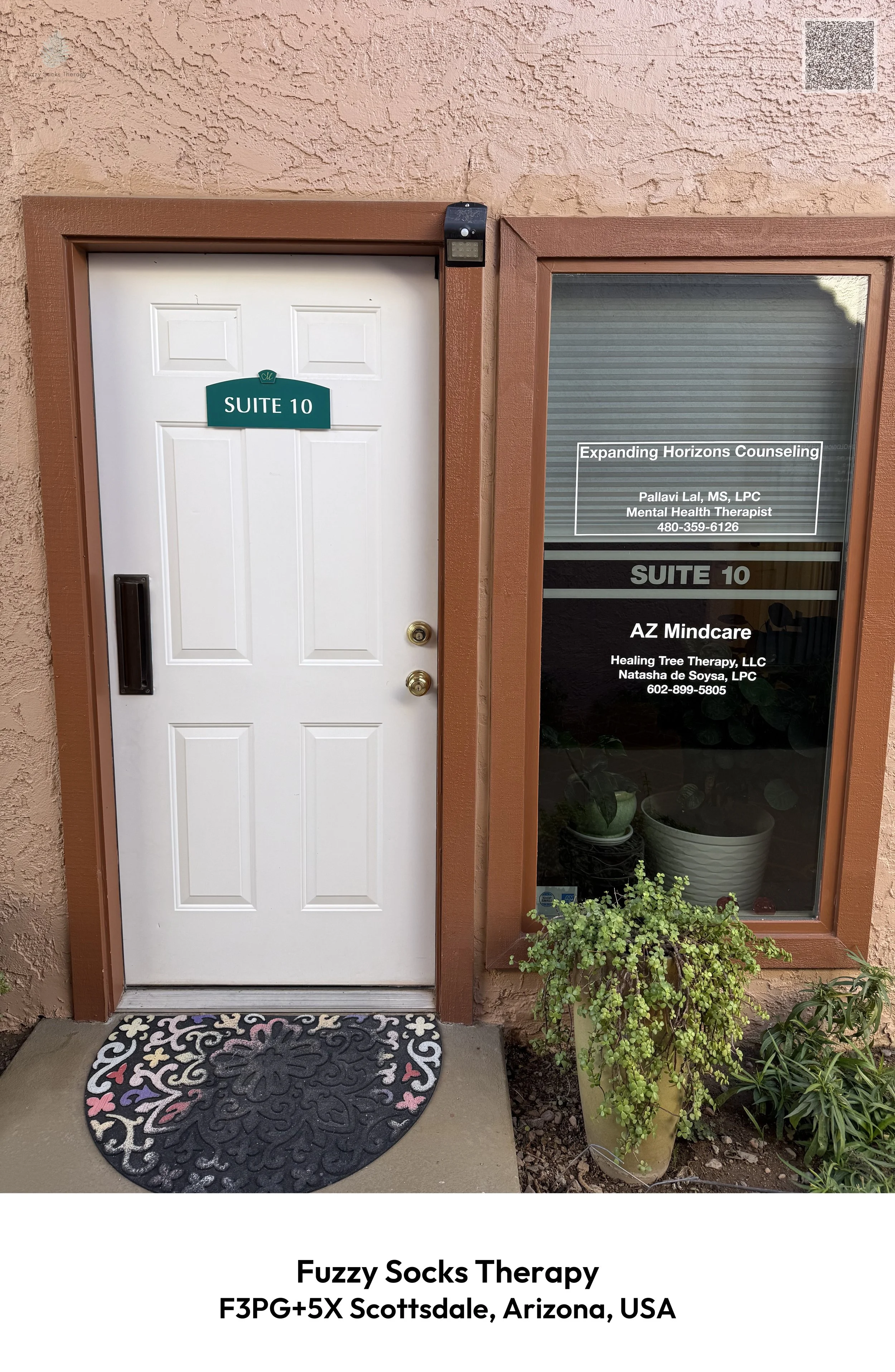
Address: 3295 N. Drinkwater Blvd., Suite 10, Scottsdale, AZ 85251
Phone: (720) 378-8454
Website: https://www.fuzzysockstherapy.com/
Email: [email protected]
Hours:
Monday: 9:00 AM - 5:00 PM
Tuesday: 9:00 AM - 5:00 PM
Wednesday: 9:00 AM - 5:00 PM
Thursday: 9:00 AM - 5:00 PM
Friday: 9:00 AM - 5:00 PM
Saturday: Closed
Sunday: Closed
Open-location code (plus code): F3PG+5X Scottsdale, Arizona, USA
Map/listing URL: https://maps.app.goo.gl/cqhwvXU4UMg6QL1YA
Embed iframe:
The practice offers in-person therapy in Scottsdale along with online sessions for clients in Arizona, Colorado, and Florida.
Clients can explore services such as trauma therapy, EMDR therapy, Deep Brain Reorienting Therapy, neurodivergent therapy, child therapy, couples therapy, discernment counseling, and parenting intensives.
Fuzzy Socks Therapy is especially relevant for people navigating trauma, dysfunctional family dynamics, ADHD, autism, relationship conflict, and emotional overwhelm.
The website presents a direct, practical therapy style focused on real tools and meaningful change rather than vague advice.
Scottsdale clients looking for trauma-informed psychotherapy can find support that combines deeper healing work with concrete skill building.
The practice also offers help for adult children of dysfunctional families, couples on the brink, and neurodivergent kids, teens, and adults.
To get started, call (720) 378-8454 or visit https://www.fuzzysockstherapy.com/ to book a free consultation.
A public Google Maps listing is also available for Scottsdale location reference alongside the official website.
Popular Questions About Fuzzy Socks Therapy
What does Fuzzy Socks Therapy help with?
Fuzzy Socks Therapy helps with trauma, dysfunctional family patterns, neurodivergence, relationship conflict, emotional overwhelm, and related challenges for individuals, couples, and families.
Is Fuzzy Socks Therapy located in Scottsdale, AZ?
Yes. The official website lists the office at 3295 N. Drinkwater Blvd., Suite 10, Scottsdale, AZ 85251.
Does Fuzzy Socks Therapy offer in-person and online sessions?
Yes. The official site says the practice offers in-person therapy in Scottsdale and online therapy in Arizona, Colorado, and Florida.
What therapy approaches are listed on the website?
The website highlights EMDR therapy, Deep Brain Reorienting Therapy, discernment counseling, play therapy, Dialectical Behavior Therapy, Emotionally Focused Therapy, and practical trauma-informed skill building.
Who provides therapy at Fuzzy Socks Therapy?
The official website identifies the therapist as Lianna Purjes.
Does the practice offer couples counseling?
Yes. The website includes couples therapy, couples intensives, and discernment counseling for couples deciding whether to stay together or separate.
Does the practice work with children and adolescents?
Yes. The site says the practice offers child therapy and support for children, adolescents, and their families.
How can I contact Fuzzy Socks Therapy?
Phone: (720) 378-8454
Email: [email protected]
Website: https://www.fuzzysockstherapy.com/
Landmarks Near Scottsdale, AZ
Drinkwater Boulevard is the clearest local reference point for this office and helps nearby clients place the practice in Scottsdale. Visit https://www.fuzzysockstherapy.com/ for service details.
Old Town Scottsdale is a familiar city landmark and a practical reference for people searching for therapy near central Scottsdale. Call (720) 378-8454 to learn more.
Scottsdale Civic Center is another recognizable local landmark that helps define the surrounding area for nearby professional services. The official website has current contact details.
Scottsdale Stadium is a well-known destination in the city and a useful point of reference for local users. Fuzzy Socks Therapy offers both in-person and online sessions.
Indian School Road is a major corridor that helps many residents orient themselves in Scottsdale. More information is available at https://www.fuzzysockstherapy.com/.
Fashion Square and the surrounding central Scottsdale area are widely recognized by local residents and visitors alike. Reach out through the website to book a free consultation.
Downtown Scottsdale is a strong local search reference for people seeking counseling and psychotherapy services in the area. The practice serves Scottsdale in person and multiple states online.
Scottsdale Road is another major route that helps define the broader service area for clients traveling from nearby neighborhoods. The practice supports individuals, couples, and families.
The Scottsdale arts and civic district is a useful area reference for those familiar with the city center. Visit the site to review specialties and next steps.
Central Scottsdale commuter corridors make this practice relevant for nearby residents who want in-person therapy, while online sessions add flexibility for clients in Arizona, Colorado, and Florida.